A manual booking process typically involves agents handling reservations through phone calls, emails, or direct inquiries. Information is entered manually into spreadsheets, documents, or internal systems, and confirmations are often created and sent individually.
While this approach may work for smaller businesses with limited booking volumes, it can quickly become challenging as operations expand.
Common characteristics of manual booking systems include:
Even the most experienced staff can make mistakes when entering customer information, calculating prices, or updating availability.
A simple typo can lead to:
As booking volumes increase, the risk of these errors grows significantly.

Today's travelers expect quick answers and instant confirmations.
When bookings require multiple emails, phone calls, or manual approval processes, customers may become frustrated and choose a competitor that offers faster service.
Manual workflows often create bottlenecks that delay:
A manual booking process typically depends on staff being available to respond to inquiries.
This means potential customers who visit your website after hours may leave without making a reservation.
Unlike an online booking system, manual processes do not generate revenue while your office is closed.
As your business grows, manual booking management becomes increasingly difficult.
More reservations require:
Growth often results in higher operating costs rather than improved efficiency.
An online booking system allows travelers to search, quote, and book products at any time.
Whether customers are browsing during lunch, late at night, or from another time zone, they can complete reservations instantly without waiting for a response.
This creates more booking opportunities and improves customer convenience.
Modern booking systems provide real-time inventory and availability updates.
This helps eliminate:
Customers can immediately see what is available and make informed purchasing decisions.
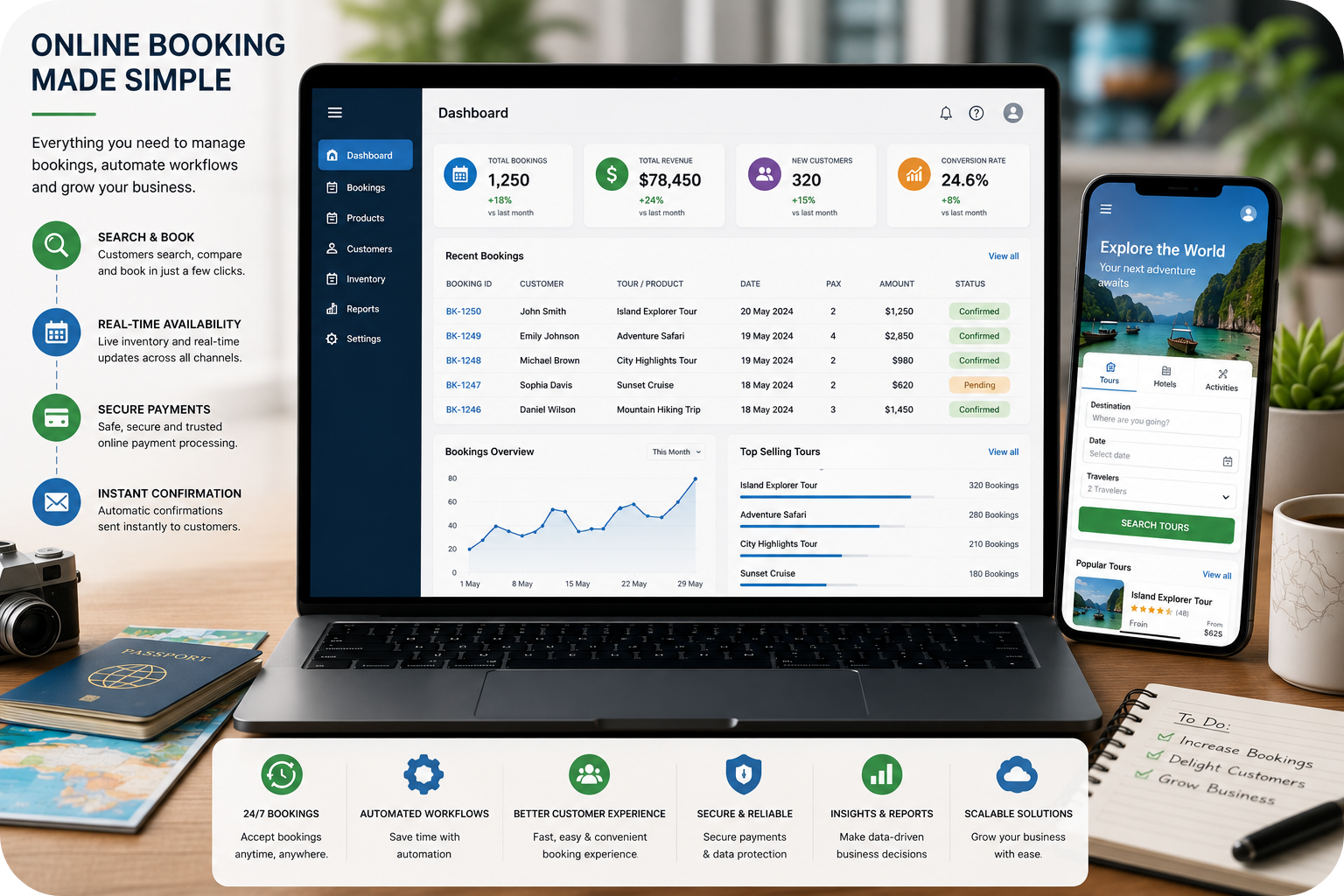
Online booking systems automate many of the tasks traditionally handled by staff.
This includes:
As a result, bookings can be completed within minutes instead of hours or days.
Today's travelers expect a smooth digital experience.
An online booking system provides:
These features improve customer satisfaction and increase conversion rates.
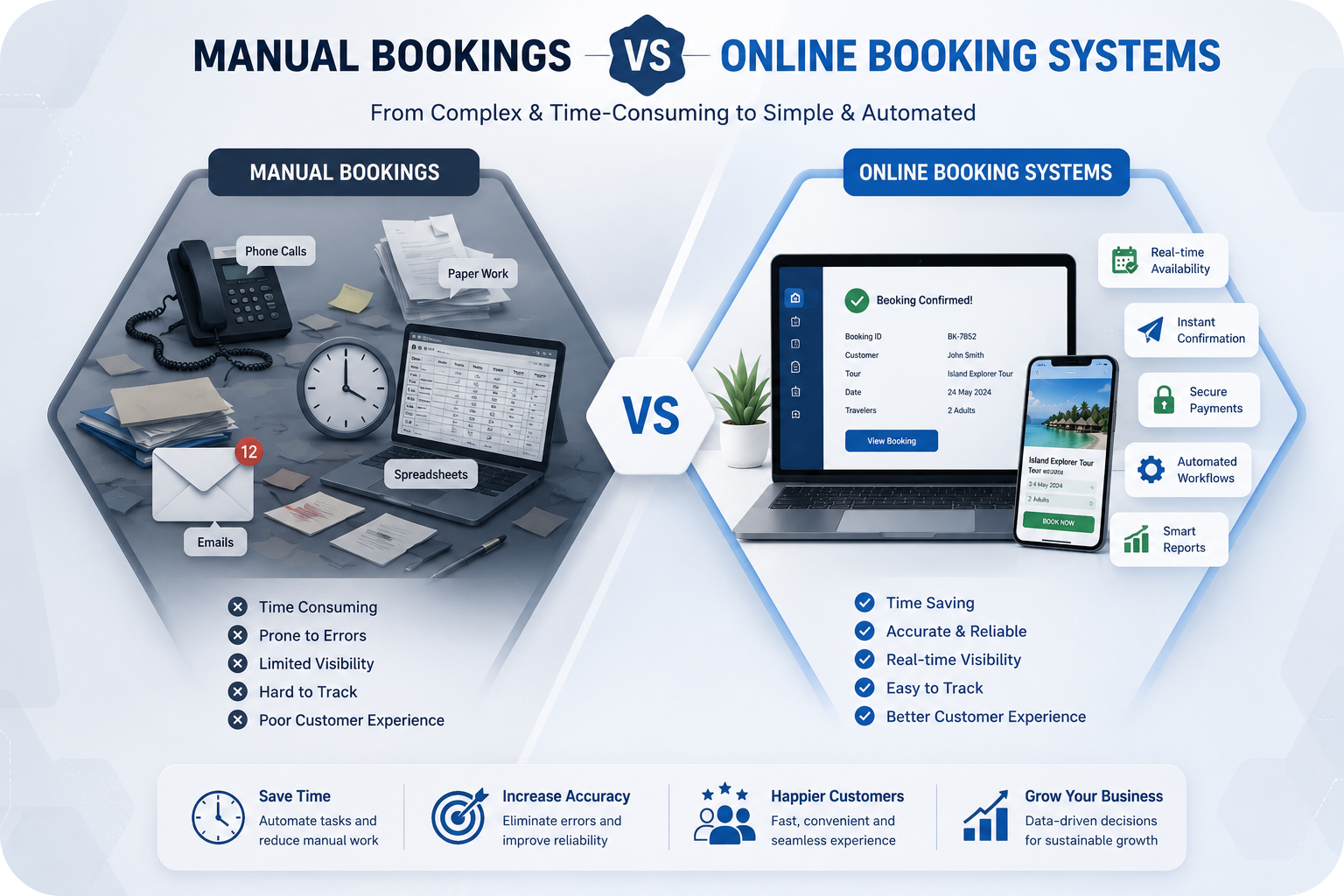
Unlike manual spreadsheets, modern booking platforms provide access to reporting and analytics tools that help operators understand:
These insights support better decision-making and long-term growth.
Many successful tour operators begin with manual processes. However, there comes a point where continued growth requires better systems and automation.
If your team spends significant time:
then an online booking system may provide substantial operational benefits.
The goal is not to replace your team-it is to allow them to focus on delivering exceptional customer experiences rather than administrative tasks.


.png)
